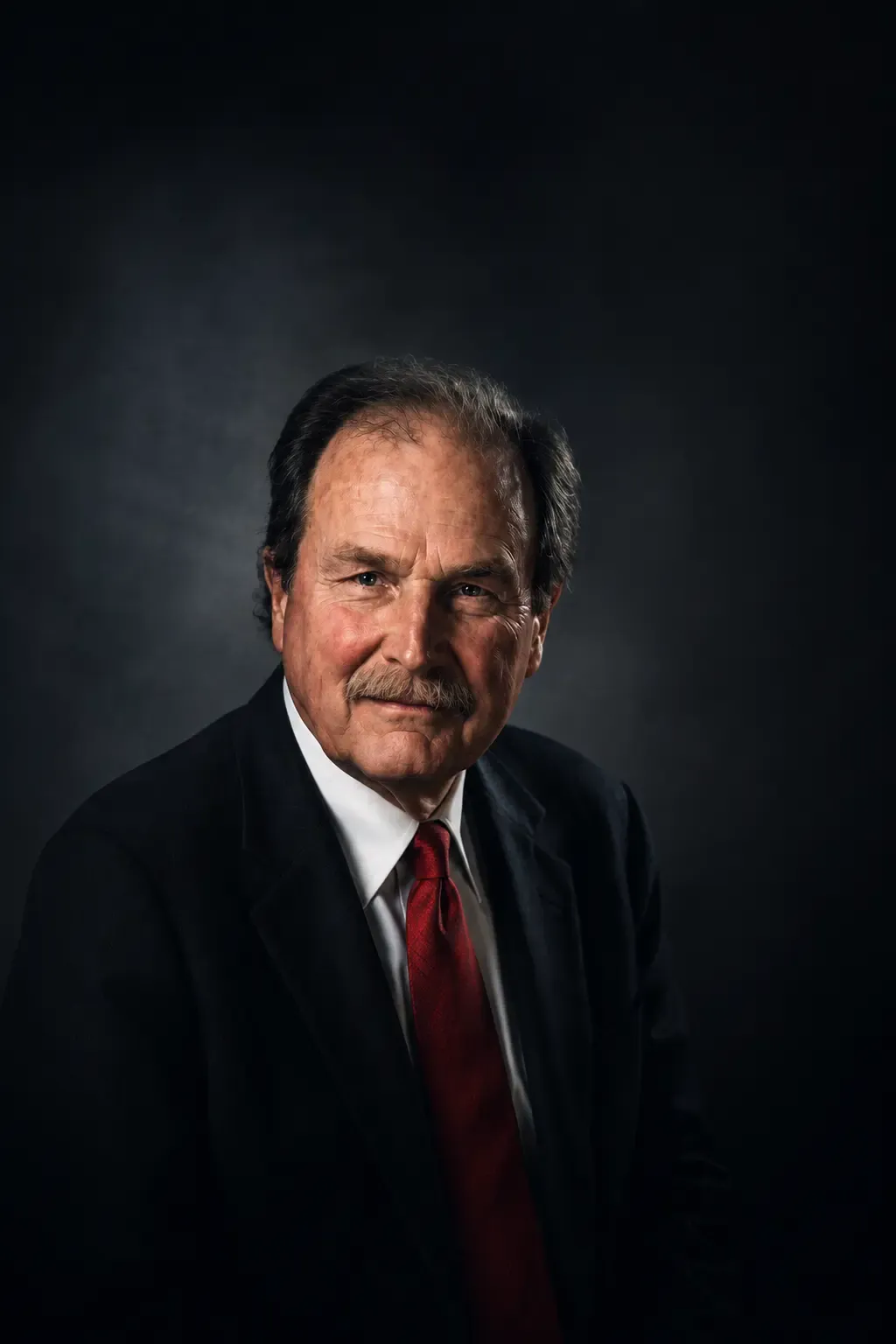
David Albert Huffman was an American engineer and scientist whose name is now best known for one of the most famous data compression algorithms. He also worked on the principles behind digital circuit design.
Huffman studied electrical engineering at Ohio State University, and after World War II served in the U.S. Navy as a radar maintenance officer. He later enrolled at MIT, where he did the work that would make him famous.
Huffman Coding
In 1951, during an information theory course at MIT, Professor Robert Fano gave his students a choice: take a final exam or solve the problem of constructing the most efficient binary code possible.
Huffman chose the problem and came up with a method in which frequently occurring symbols receive short binary codes, while rarer symbols receive longer ones. The resulting prefix code made it possible to reconstruct the original data unambiguously while minimizing the average codeword length for a given set of symbol probabilities.
In September 1952, Huffman published his result in the paper A Method for the Construction of Minimum-Redundancy Codes.
The algorithm proved remarkably long-lived. For decades, and even today, Huffman coding has been used in all kinds of devices and software. It became especially useful during the early Internet era, when connections were slow and expensive. Modern users still indirectly rely on Huffman coding when working with formats such as MP3 and JPEG.
Digital Circuits
Huffman was not only a data compression specialist. His doctoral dissertation at MIT was titled The Synthesis of Sequential Switching Circuits. Very roughly speaking, these are circuits capable of retaining state — in other words, memory.
For his doctoral work on sequential circuits, Huffman received the Franklin Institute’s Louis E. Levy Medal.
Radar and Communication Systems
Huffman also worked on signal design for radar and communication systems.
It was a field he had known since his time in the Navy. After graduating from Ohio State University, he served as a radar maintenance officer aboard a U.S. Navy destroyer. Signal design for radar and communications later became one of the areas of his scientific research.
Computer Vision
Huffman also made a contribution to computer vision.
In 1971, he published a paper titled Impossible Objects as Nonsense Sentences. Huffman studied how the structure of a three-dimensional object could be inferred from a two-dimensional line drawing and, in particular, how to determine when a drawing represented a geometrically impossible object.
This work belongs to the early history of computer vision — attempts to teach computers to understand the geometric relationships between objects in an image.
Origami
During the later decades of his career, Huffman became interested in efficient mathematical representations of surfaces. His research into surfaces with zero Gaussian curvature led him into a rather unexpected field: origami.
Huffman developed his own paper-folding techniques and created complex geometric forms, using not only straight folds but also curved creases.
This was more than a hobby. Huffman used origami to explore methods of representing objects from the three-dimensional world through two-dimensional constructions.
Links
- David Huffman profile — IEEE Computer Society
- A Method for the Construction of Minimum-Redundancy Codes — original 1952 paper
- UC Santa Cruz: David Huffman honored for his work in information sciences
- UC Santa Cruz: David Huffman obituary and career overview
- Reconstructing David Huffman’s curved-crease origami
See also Celebrating Claude Shannon: The Innovator Who Defined the Bit and Shaped Digital Communication and Karlheinz Brandenburg and the Birth of MP3: Transforming Digital Music.