
Karlheinz Brandenburg and the Birth of MP3: Transforming Digital Music
June 20, 1954
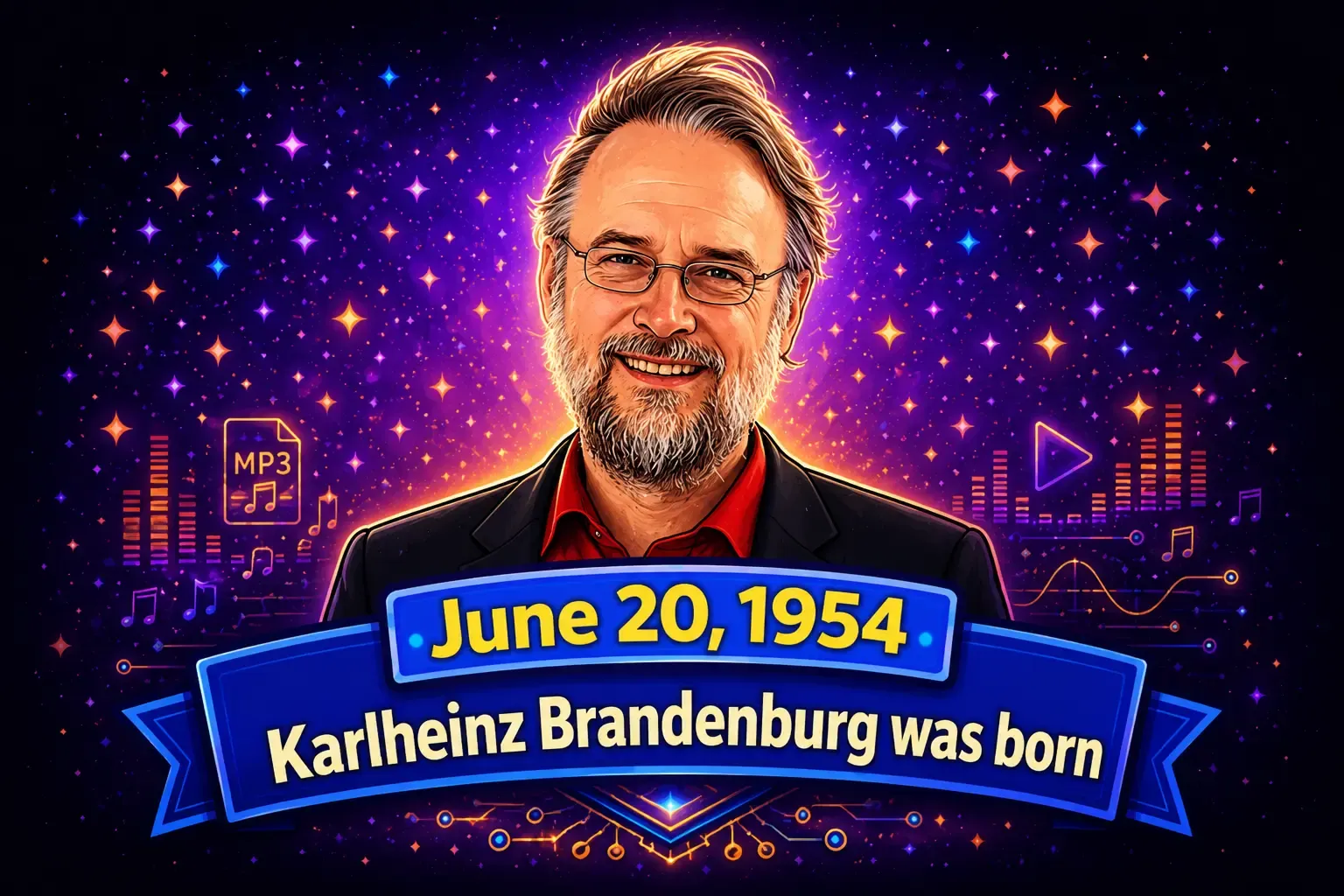
Karlheinz Brandenburg is often called the “father of MP3.” He was born in Erlangen, West Germany, and studied at the University of Erlangen–Nuremberg, where he earned his PhD in 1989.
He later worked at the Fraunhofer Institute for Integrated Circuits, where he began tackling the problem of digital audio compression. Brandenburg and his team were looking for a way to reduce the size of audio files without noticeably degrading sound quality, making music easier to store and transmit over networks.
Digital audio formats already existed at the time. CD Audio, developed by Sony and Philips, offered excellent sound quality but required large amounts of storage space. Improving quality further would only make files even larger. Brandenburg’s team set out to solve that problem. By the late 1980s, they had developed a working version of what would become the MP3 format.
Brandenburg has often shared the story of using Suzanne Vega’s song Tom’s Diner to test the quality of MP3 compression. He listened to the track thousands of times while refining the codec. Later, the team invited Suzanne Vega herself to listen to an MP3-encoded version of the song. When she could not hear a meaningful difference from the original recording, it was a strong sign that the technology was ready for real-world use.
Today, Karlheinz Brandenburg is still active in the fields of audio and multimedia technology. He continues to research immersive and spatial audio systems, regularly speaks at conferences, and remains one of the most respected figures in the world of digital sound and multimedia.
See also February 19, 1990: The Birth of Adobe Photoshop and Digital Image Editing.
Key facts
- Event date
- 1954-06-20
Sources
Pasha Kalashnikov